
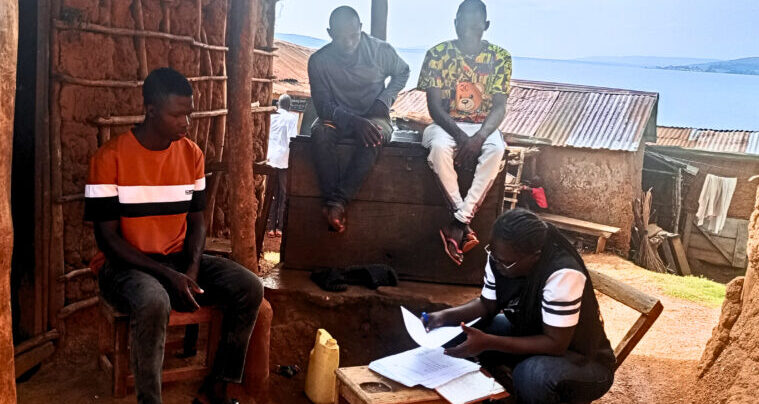
In Uganda, mountainous regions, fishing settlements, last-mile locations, and vulnerable populations often remain excluded from traditional energy markets. Through its “Leave No One Behind” initiative, Energising Development (EnDev) partnered with the Private Sector Foundation Uganda (PSFU) to expand access to solar energy for some of the country’s hardest-to-reach communities.
By applying results-based financing, the project reduced commercial risks for solar companies, enabling them to expand into underserved markets. Results-based financing is an instrument through which EnDev provides financial incentives to private sector actors, such as solar companies and distributors, for the verified achievement of predefined results. For example, the sale and installation of solar systems. Within this framework, EnDev defines the target markets and eligible customer groups that the supported companies are expected to serve, ensuring that energy solutions reach underserved or priority areas.
This support allowed companies to hire and train staff, strengthen internal systems, and invest in innovation. Companies such as Luk Solar, d.light Design Uganda, Access to Solar Technologies, and Ignite Energy Access Uganda demonstrated what becomes possible when the private sector is supported to innovate for inclusion. For example, Luk Solar’s close engagement with customers built trust, improved customer satisfaction, and increased access, especially for older people and persons with disabilities.

Light Reaches the Last Mile
The project’s impact extended far beyond simple energy connections, catalysing a wave of direct and indirect employment across solar companies, technical services, and local supply chains. By facilitating a transition away from kerosene and candles, the initiative significantly advanced climate goals while drastically improving indoor air quality for families.
These shifts represent a profound transformation in livelihoods rather than mere incremental change. In total, the initiative has reached over 44,000 people, representing 8,850 households across Uganda. These figures underscore the broad human scale of the project, ensuring that thousands of individuals now benefit from safer, cleaner, and more reliable energy.
In Butagaya, Jinja District for example, the impact of this effort is visible in everyday life. An elderly grandmother who once rushed to finish her chores before nightfall now lives in a home illuminated by solar light. She can prepare her evening meal safely, move around without fear, and watch her grandchildren read and study after sunset. For her and for hundreds of thousands of households now accessing solar energy light represents far more than illumination. It represents opportunity, safety, and possibility.
The Private Sector Foundation Uganda (PSFU), as the fund manager for the LNOB initiative under EnDev, played a central role in coordinating all companies or sales persons that received results-based financing. PSFU ensured that they carried out sales activities in hard-to-reach districts, helping to drive tangible improvements in people’s lives.
Lessons for Scaling Inclusive Energy Access
The project highlighted several areas that require continued attention. After-sales service remains critical as delays in repairs, token delivery, and the long distances to service centers can frustrate customers. Network connectivity challenges affect service delivery, and transportation costs remain a barrier for both providers and users in remote locations. Addressing these issues will be essential to sustaining trust and scaling sustainable energy access.
Looking ahead, Uganda has approximately 10.7 million households, yet only about 2.3 million have access to electricity, often limited to a single light bulb. Expanding reliable and affordable energy services therefore remains critical.
At the same time, demand for productive-use appliances and system upgrades is growing, showing that communities are ready to move beyond basic lighting toward energy solutions that support businesses, agriculture, and local enterprises.
The LNOB initiative demonstrates that when energy solutions are designed around people not only systems, but they can also become a powerful catalyst for inclusion, economic opportunity, and sustainable development.